Icod de los Vinos:
Nature, Biodiversity, and Protected Landscapes
Icod de los Vinos: Between the Sea and Mount Teide
Located in the northwest of Tenerife, Icod de los Vinos is a destination that amazes visitors with its rich landscapes and exceptional natural diversity. It borders the municipalities of Santiago del Teide, Garachico, La Guancha, and La Orotava, covering an area of 95.91 km², making it the ninth largest municipality on the island.
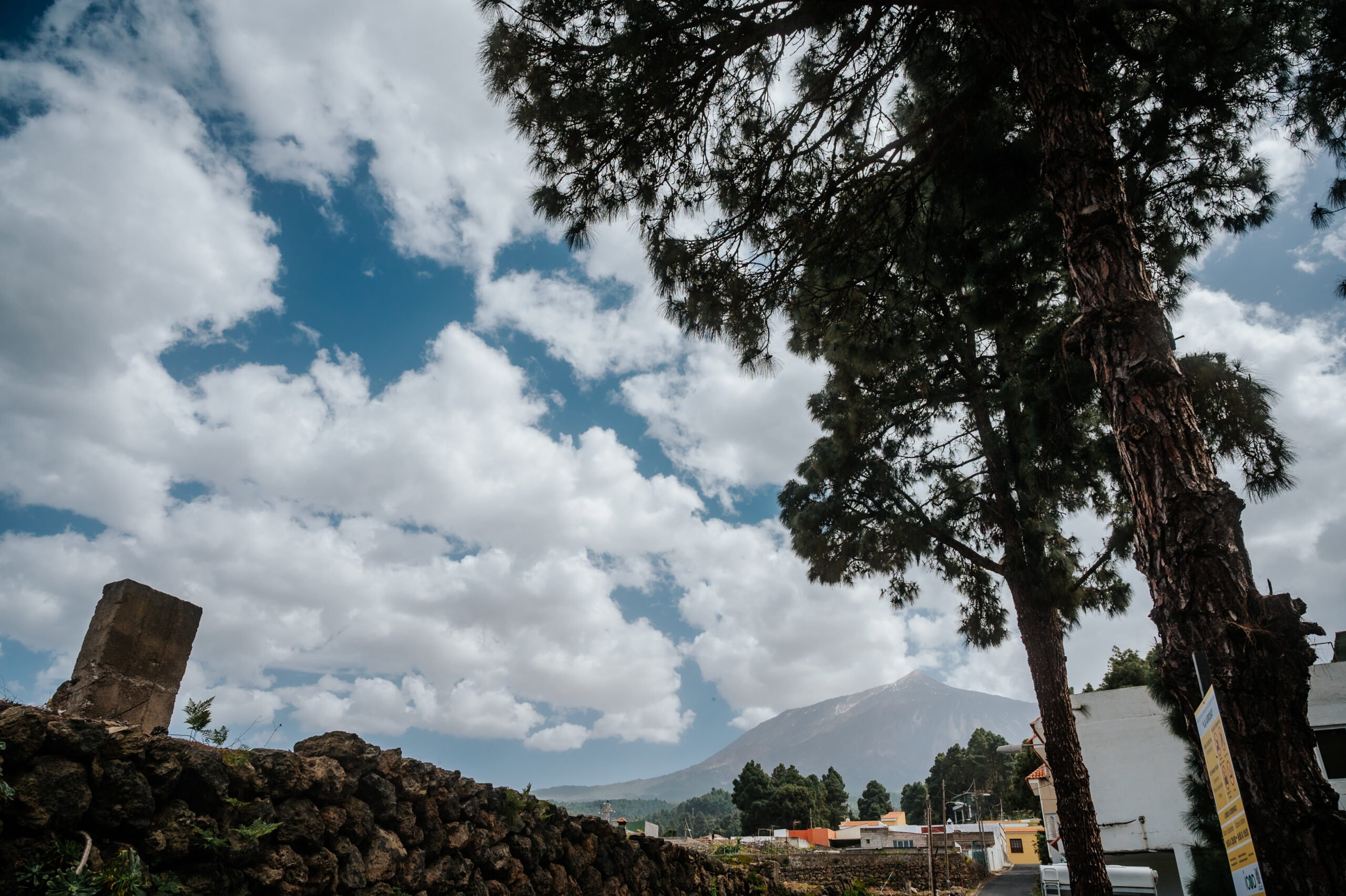
From the Atlantic coast to the slopes of the majestic Mount Teide, Icod de los Vinos rises through a territory full of contrasts. Its highest point, Cerro de las Chajoras (2,755 m above sea level), lies within the northern slope of Teide National Park.
Icod de los Vinos offers an exceptional natural environment with remarkable biodiversity, including many endemic species of the Canary Islands. From its cliffs and pine forests to the Protected Landscape of La Culata Cliffs, the Corona Forestal Natural Park, and the Teide National Park, more than 60% of its territory falls under environmental protection.
The Canary Island pine, the dragon tree, and other native species accompany visitors along forest trails, shrublands, and volcanic landscapes, making Icod de los Vinos a must-see destination for nature lovers.
Corona forestal Natural Park
The great green lung of Tenerife awaits you in Icod de los Vinos.
Immerse yourself in pure nature within the Corona Forestal Natural Park, the largest protected area in the Canary Islands. From Icod de los Vinos, visitors can explore this impressive landscape of centuries-old pine forests, deep ravines, and volcanic formations surrounding Mount Teide. A wide network of forest trails makes it ideal for hiking, trekking, and mountain biking.
Within the municipal boundaries of Icod de los Vinos, the park covers 5,132.08 ha, representing approximately 11.01% of this protected space.
Highlighted flora:
Extensive forests of Canary Island pine (Pinus canariensis) — the most significant forest mass in the archipelago.
At lower altitudes: remnants of laurel forest with laurel, faya, heather, holly, and strawberry trees.
At higher elevations: high-mountain scrub with Teide broom, escobón, and codeso.
Highlighted fauna:
- Birds: Teide blue chaffinch, kestrel, Canary Islands chiffchaff, and common blue tit.
- Reptiles: Gallotia galloti galloti (Tizón lizard) and Canary Island skink.
- Mammals: bats.
Protected landscape of La Culata cliffs
Located between Icod de los Vinos and Los Silos, the La Culata Cliffs are among the most spectacular natural formations in northern Tenerife. Declared a Protected Landscape, this area combines ancient volcanic formations, native vegetation, and unique biodiversity in a setting of great scenic and cultural value.
Highlighted flora:
Coastal vegetation with halophilic species such as sea lavender, statice, sea thyme, and golden everlasting.
On slopes and ravines: juniper, pistachio, dragon tree, and wild olive.
Among its ravines, slopes, and escarpments grow junipers, monteverde forest species, pistachio trees, and lichens clinging to old lava flows. The cliffs are home to endemic and protected species such as the Barbary falcon, buzzard, laurel pigeons, bats, and Tizón lizards.
Highlighted fauna:
- Seabirds like the Cory’s shearwater and Bulwer’s petrel.
- Reptiles and protected species such as the laurel pigeon.
Drago de San Antonio
A living symbol of nature and resilience in Icod de los Vinos.
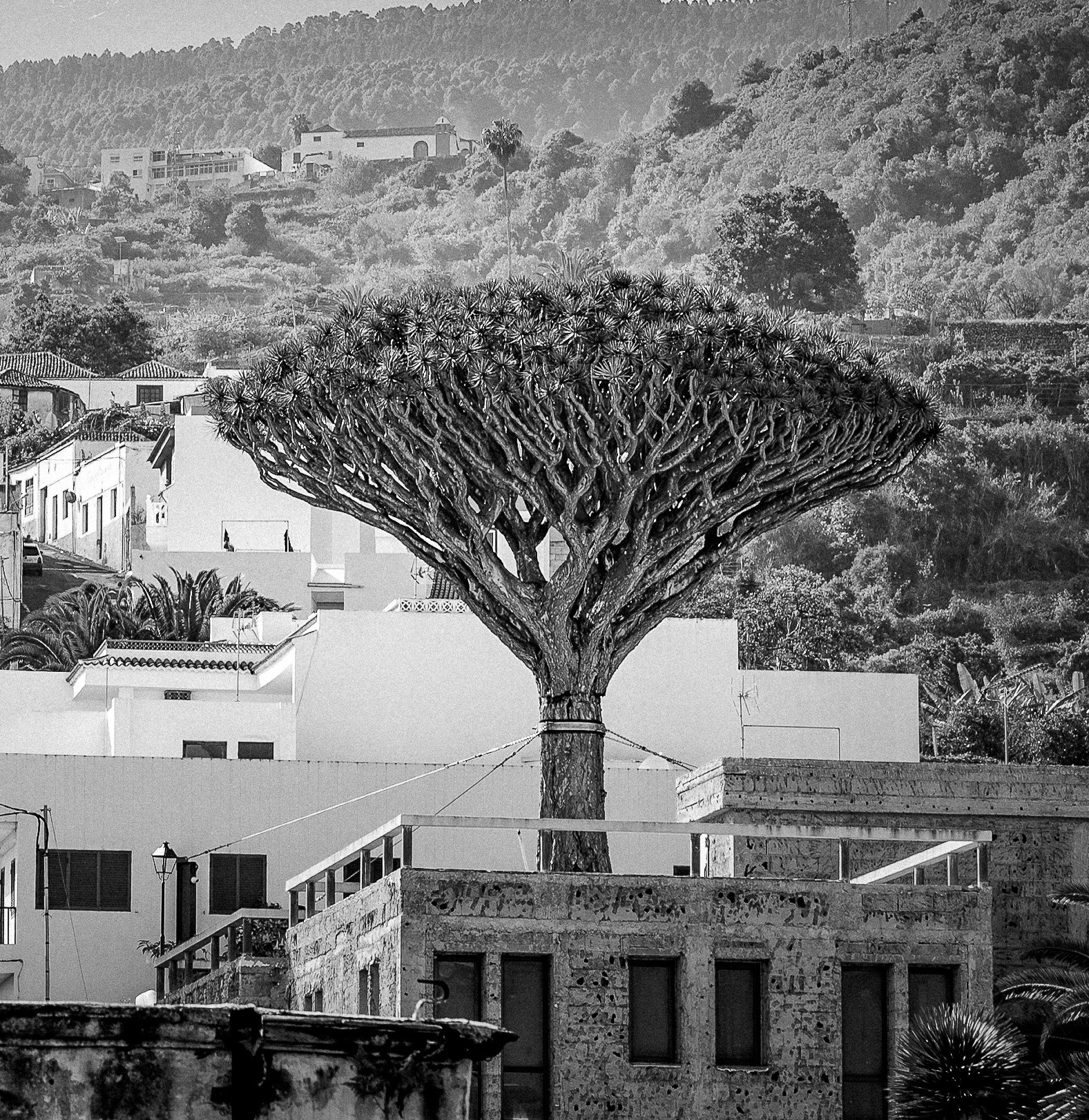
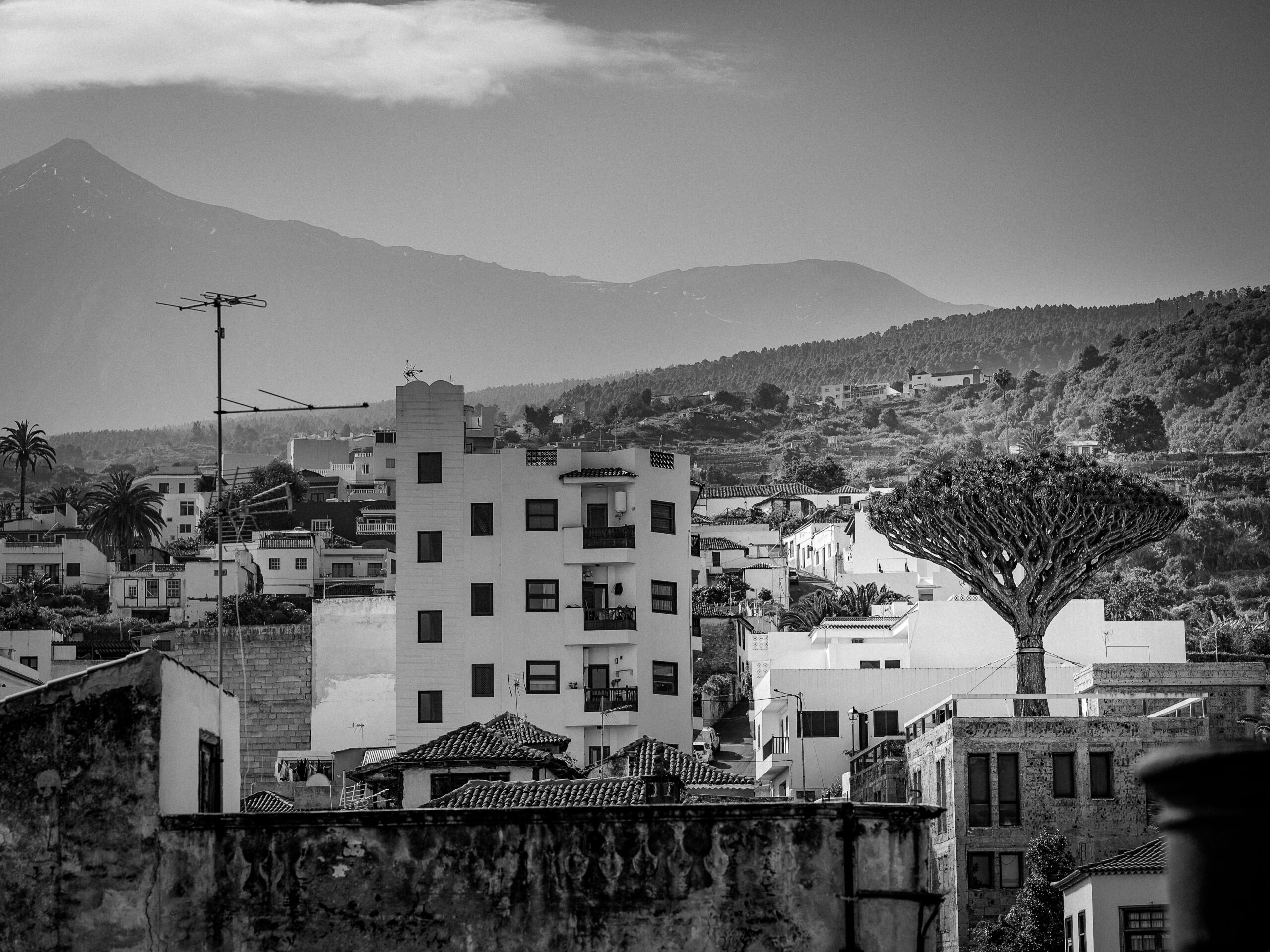
In the heart of San Antonio Street stands one of the most emblematic dragon trees in the Canary Islands — the Drago de San Antonio, a majestic specimen of Dracaena draco over 300 years old. This natural treasure impresses visitors with its stature and story of endurance.
Throughout history, it has survived multiple threats, from attempts to cut it down in the 1960s to an intentional fire in 2022. Thanks to the dedication of the local council and the community, it has been structurally reinforced and fully restored.
The Drago de San Antonio is a symbol of local identity, ecological commitment, and natural heritage. Visiting it means connecting with the living history of Icod de los Vinos.
Relevant information:
- Calle San Antonio, 10, 38438 Icod de los Vinos, Santa Cruz de Tenerife
- Open daily from 9:00 AM to 6:00 PM
San Marcos Beach
San Marcos: Tradition, Sea, and Tranquility
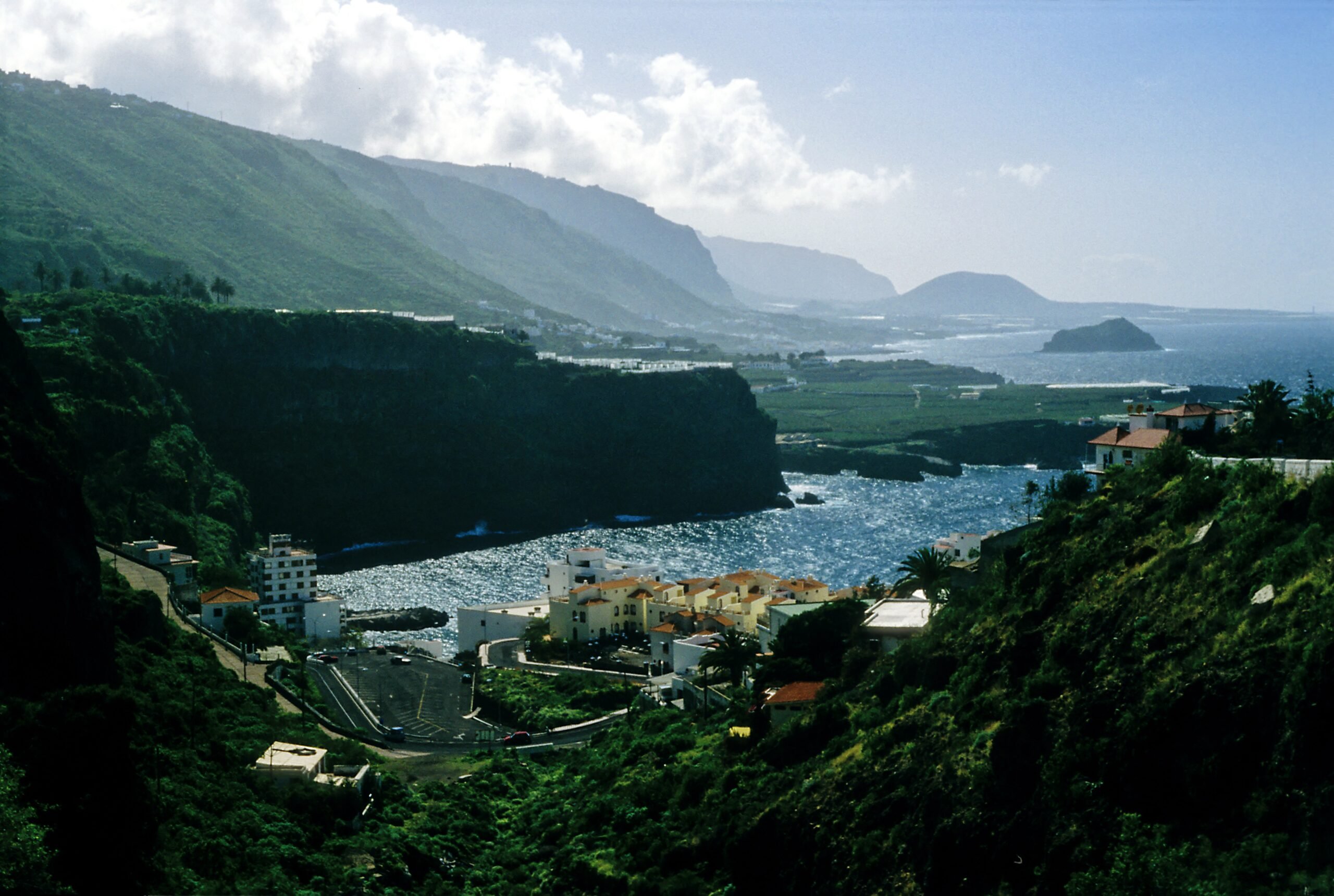
San Marcos Beach is one of the most peaceful beaches in northern Tenerife. Nestled in a small, horseshoe-shaped bay that shelters it from waves, it features black volcanic sand, calm waters, and a family-friendly atmosphere, making it ideal for swimming, especially in summer. It offers amenities such as showers, restaurants, and seaside terraces.
History and Tradition
Its name comes from a Guanche legend about the discovery of a statue of Saint Mark in a seaside cave in the late 15th century, before the Spanish conquest. The statue is now housed in the Parish Church of San Marcos.
Strategic and Economic Importance
During the 16th and 17th centuries, San Marcos served as a refuge port and was targeted by pirates, prompting the construction of a defensive wall and watchtower. A shipyard was also established here in 1590, with workshops in the nearby hills — wood was transported down to the coast, giving rise to the local tradition of the Tablas de San Andrés.
Today
Today, La Caleta de San Marcos is a charming tourist and fishing neighborhood, featuring a small port, residential homes, and the Chapel of the Sacred Heart of Mary, in neo-Gothic style. Though few material traces of the old port remain, the area remains historically and culturally significant for the town.
Relevant information:
Finca Boquín
History, Architecture, and Nature.
Located in Ruiblás, overlooking the Barranco de Caforiño, this 17th-century estate dominates the Icod Valley. It preserves traditional Canarian architectural features such as wooden balconies, stone masonry, and tile roofs. It was possibly built by Jerónimo Boquín y Prado, the first corregidor, from a Genoese family settled in the Canary Islands.
Declared a Site of Cultural Interest and part of the Protected Natural Landscape of La Culata Cliffs, the estate maintains natural springs for terraced irrigation and traditional crops adapted to the terrain.
During the autumn of 1921–22, anthropologist Bronisław Malinowski stayed here and wrote part of The Argonauts of the Western Pacific, signing its preface from “El Boquín, Icod de los Vinos, Tenerife.”
In the 20th century, the property covered about 17 hectares of farmland (bananas, mixed crops, and vineyards). In 1997, it was acquired by the Cabildo de Tenerife and transformed into an environmental education center for school visits, promoting the conservation of rural heritage, water culture, and local biodiversity. Native species such as palm trees, dragon trees, and fayas thrive here, along with nesting birds like kestrels and hawks.
Relevant information:
Cueva del viento
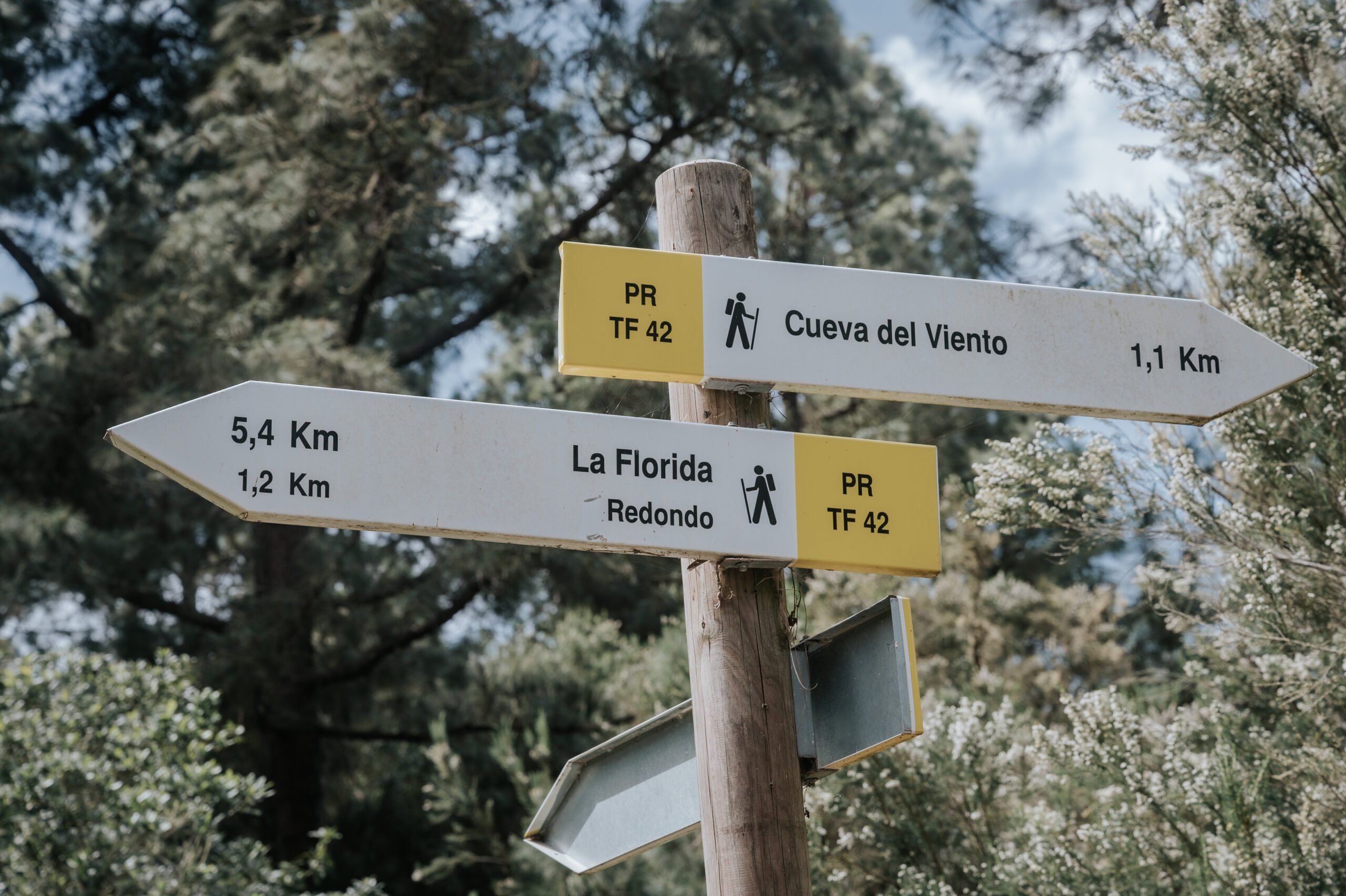
La Cueva del Viento es una cavidad volcánica situada en Icod de los Vinos, formada hace unos 27.000 años por lavas del volcán Pico Viejo, cercano al Teide. Con 18 km topografiados, es el tubo volcánico más largo de Europa y el quinto del mundo, solo superado por los de Hawái.
Su nombre se debe a las intensas corrientes de aire internas. En su interior, el visitante puede observar formaciones volcánicas únicas esculpidas por la lava, que transmiten la sensación de estar dentro de un organismo petrificado.
La Cueva del Viento, ubicada en Icod de los Vinos, es un impresionante tubo volcánico de más de 17 km. Entre sus múltiples niveles alberga una comunidad única de especies adaptadas a la oscuridad:
- 190 especies conocidas, en su mayoría invertebrados.
- 44 troglobias, es decir, especies que sólo habitan en cuevas, muchas sin ojos ni pigmento.
- 15 nuevas para la ciencia, como la cucaracha sin ojos Loboptera subterranea y escarabajos como Wolltinerfia martini y Wolltinerfia tenerifae
- También se han hallado restos fósiles de especies ya extintas de Tenerife, como el lagarto gigante (Gallotia goliath) y la rata gigante (Canariomys bravoi), además de huesos de aves tradicionales en la zona.
La compleja red de galerías, con salas como “la sala de las Raíces”, alberga comunidades cavernícolas altamente especializadas. Esto convierte a la Cueva del Viento en uno de los entornos subterráneos de mayor diversidad endémica y conservación del mundo.
Información relevante:
Cuevas de Don Gaspar
Located in the Los Castañeros area, the Cueva de Don Gaspar is one of Icod de los Vinos’ most important archaeological sites. Declared a Site of Cultural Interest, it preserves evidence of Guanche occupation from the 3rd century BCE to the 3rd century CE.
Inside, archaeologists have found pottery, stone tools, animal remains, and ancient seeds that reveal details of pre-Hispanic life. The site includes several interconnected caves, a natural spring, and old tile kilns in a landscape of high heritage value.
Relevant information:
- Not open to the public.
La cueva de los Guanches
Declared a Site of Cultural Interest as an Archaeological Zone in 2005, the Cueva de los Guanches is located 125 meters above sea level on the cliffs of Playa Moreno. It is a branched volcanic tube, partially blocked by rockfalls or human activity. The surrounding vegetation includes euphorbia, cornical, and rocky scrub.
The entrance (1.85 m high, widening to 3.35 m) made it suitable for seasonal habitation. Despite later alterations, remains such as pottery, obsidian and basalt tools, animal and human bones, and food traces have been found. In the 1990s, archaeologists uncovered a lateral entrance with a secondary burial site. Outside, circular and oval dry-stone enclosures associated with pastoral activity are preserved.
Las Hayas Recreational Area
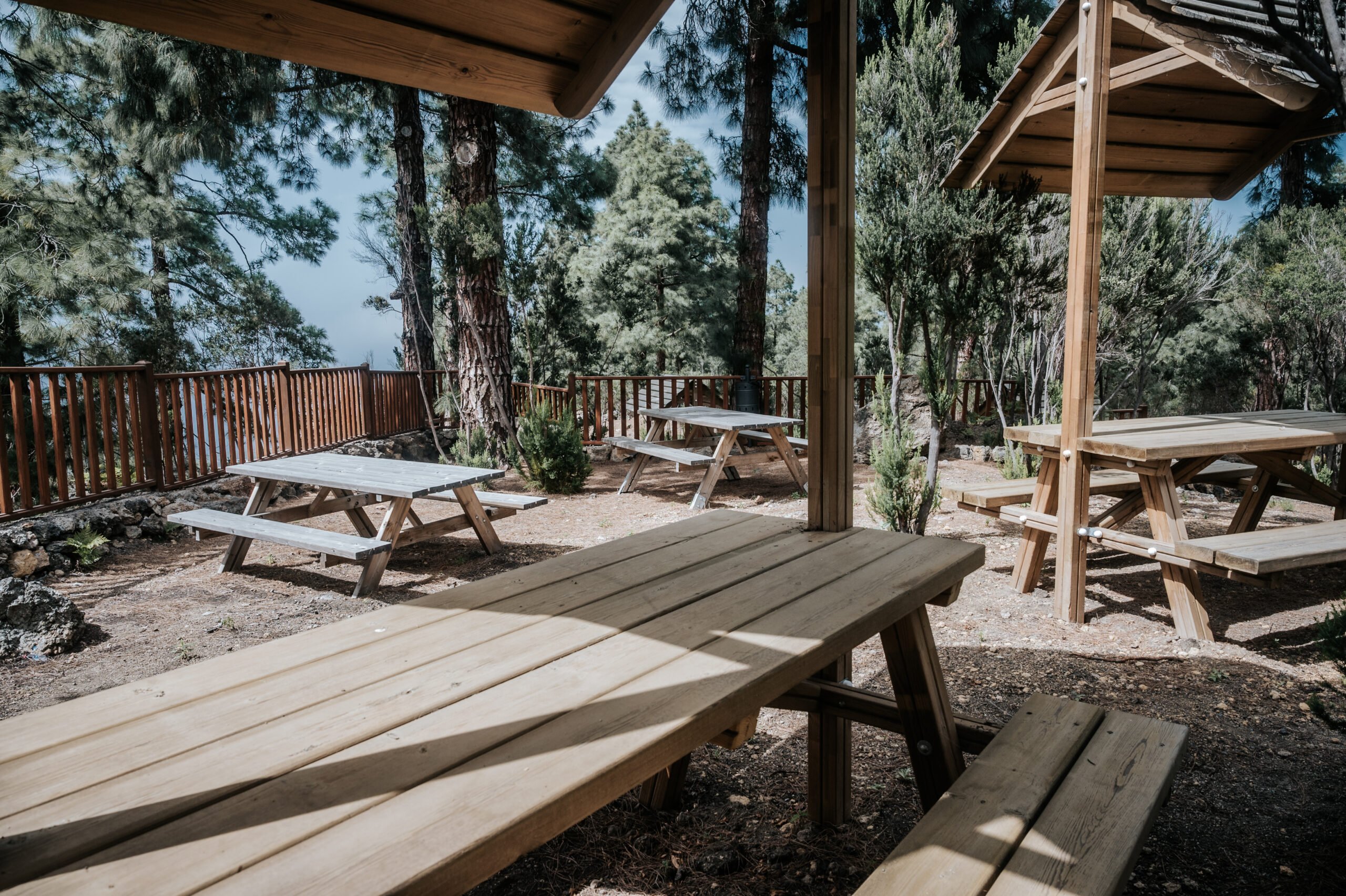
Located about 1,000 meters above sea level, the Las Hayas Recreational Area lies atop ancient Roques Blancos lava flows, formed during an eruption from Tenerife’s central peaks less than 2,000 years ago.
The constant humidity brought by the trade winds supports lush monteverde vegetation with fayas, heather, and holly trees, coexisting harmoniously with Canary Island pines. Bird species such as chaffinches, chiffchaffs, and blue tits are common.
Next to the recreational area is a designated campsite for tents.
La Airosa Recreational Area
A mountain recreation and sports area featuring picnic spots where you can rest and enjoy magnificent panoramic views.