
Festivals of
Icod de los Vinos
Experience the Soul of the Town
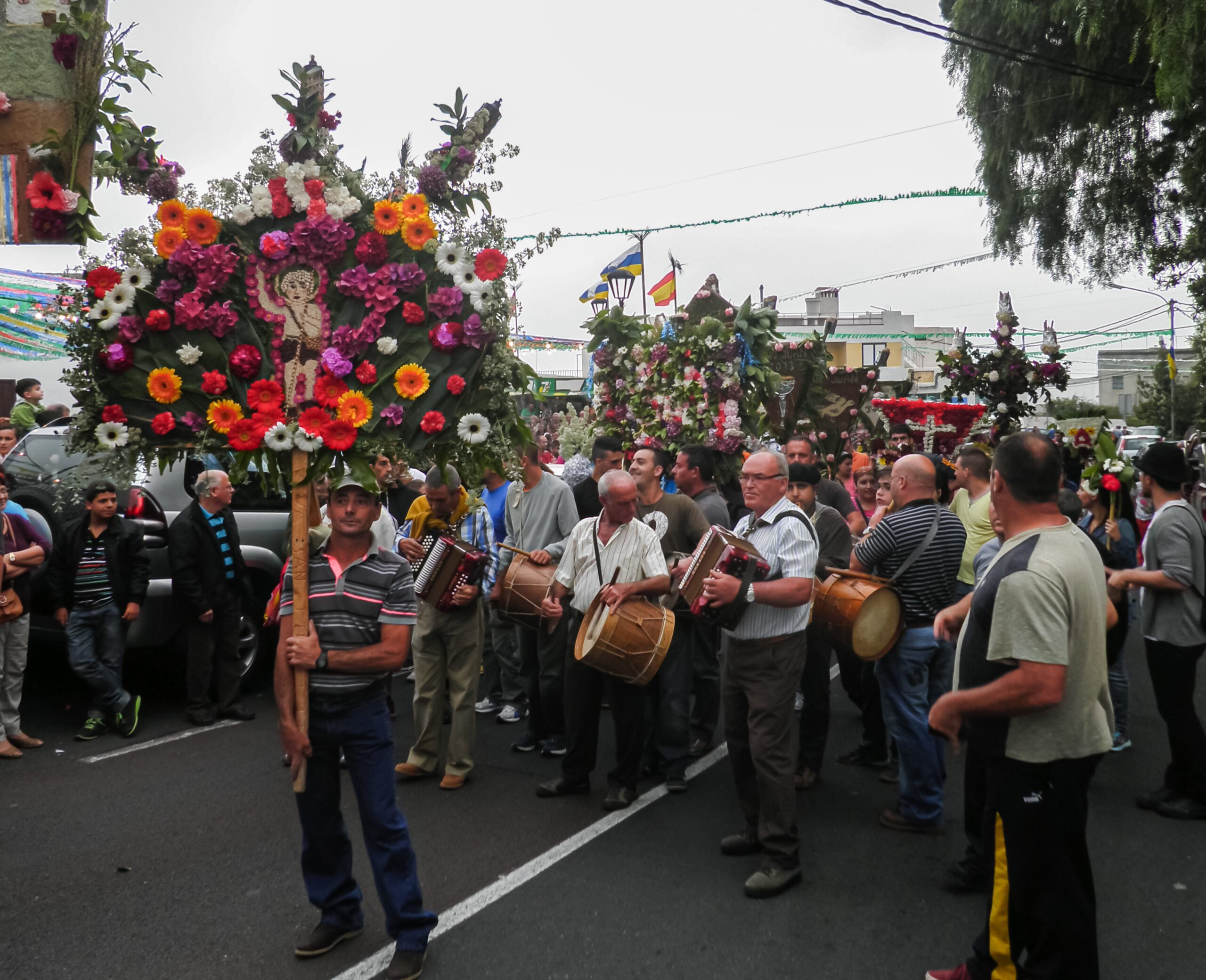
From the Romería of San Isidro to the playful San Fermín festivities with their foam bulls, every celebration in Icod de los Vinos has its own distinct character. Some, like the Tablas de San Andrés, offer pure adrenaline as participants slide down steep streets, while others, such as the Enrame de las Cruces or Flores del Calvario, fill the town with color, devotion, and community spirit.
In neighborhoods like Santa Bárbara, the unique tradition of Bollos y Cestos brings together young people and families in a one-of-a-kind pilgrimage. Meanwhile, in El Amparo, Poleo and Tajaraste blend music, dance, and offerings in a heartfelt expression of identity. During the Nights of San Juan, the town glows with Hachitos—torches and bonfires that purify and celebrate life.
The sea also plays its part in the Embarcaciones of San Marcos, a beautiful maritime procession honoring the Virgin of Carmen and Saint John. And for those who love popular theatre, the beloved Comedias del Amparo are a must-see, full of humor and local flavor.
Tradition, identity, and joy — the festivals of Icod de los Vinos invite you to become part of their living spirit. Experience the culture from within, feel the warmth of its people, and celebrate a story that renews itself year after year.
The Boards of Saint Andrew (Tablas de San Andrés)
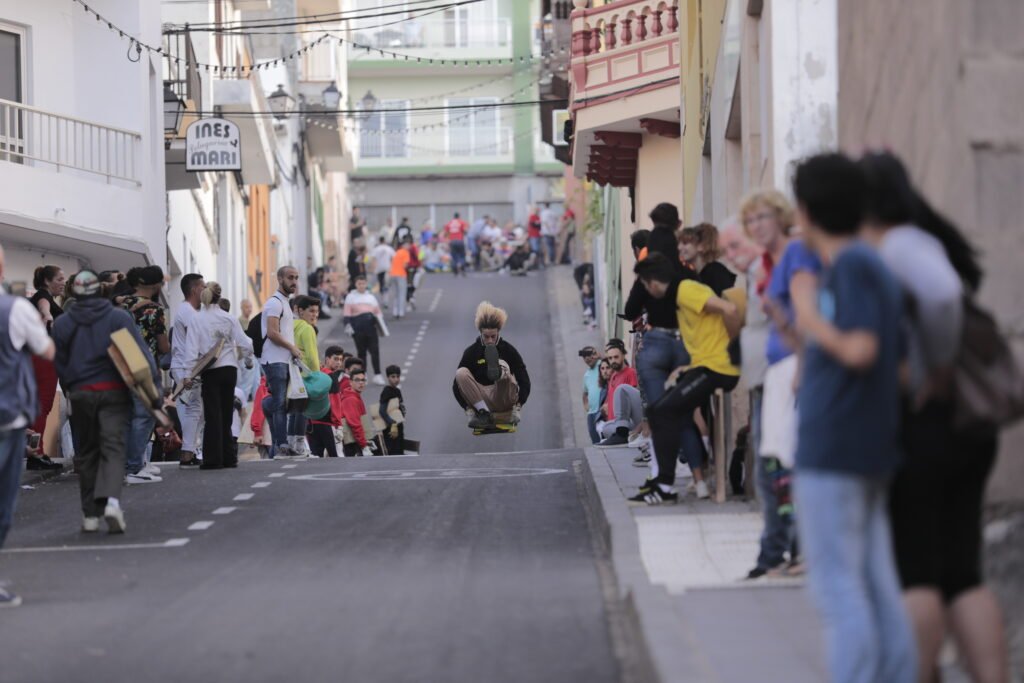
This festival consists of sliding down the steep streets of the town on wooden boards made of Canary pine. The undersides of the boards are usually coated with animal fat, grease, oil, or candle wax to make them slide faster—adding both excitement and speed.
Like any living tradition, the Boards of San Andrés have evolved over time, becoming a spectacular event that shapes the town’s identity. Its origin dates back to the 16th century, when locals used wooden planks to transport timber downhill. After this practice disappeared, it transformed into a festive event linked to the Feast of Saint Andrew and the opening of the new wine.
Icod de los vinos
November 29 and 30
The Devil and the She-Devil (El Diablo y la Diabla)
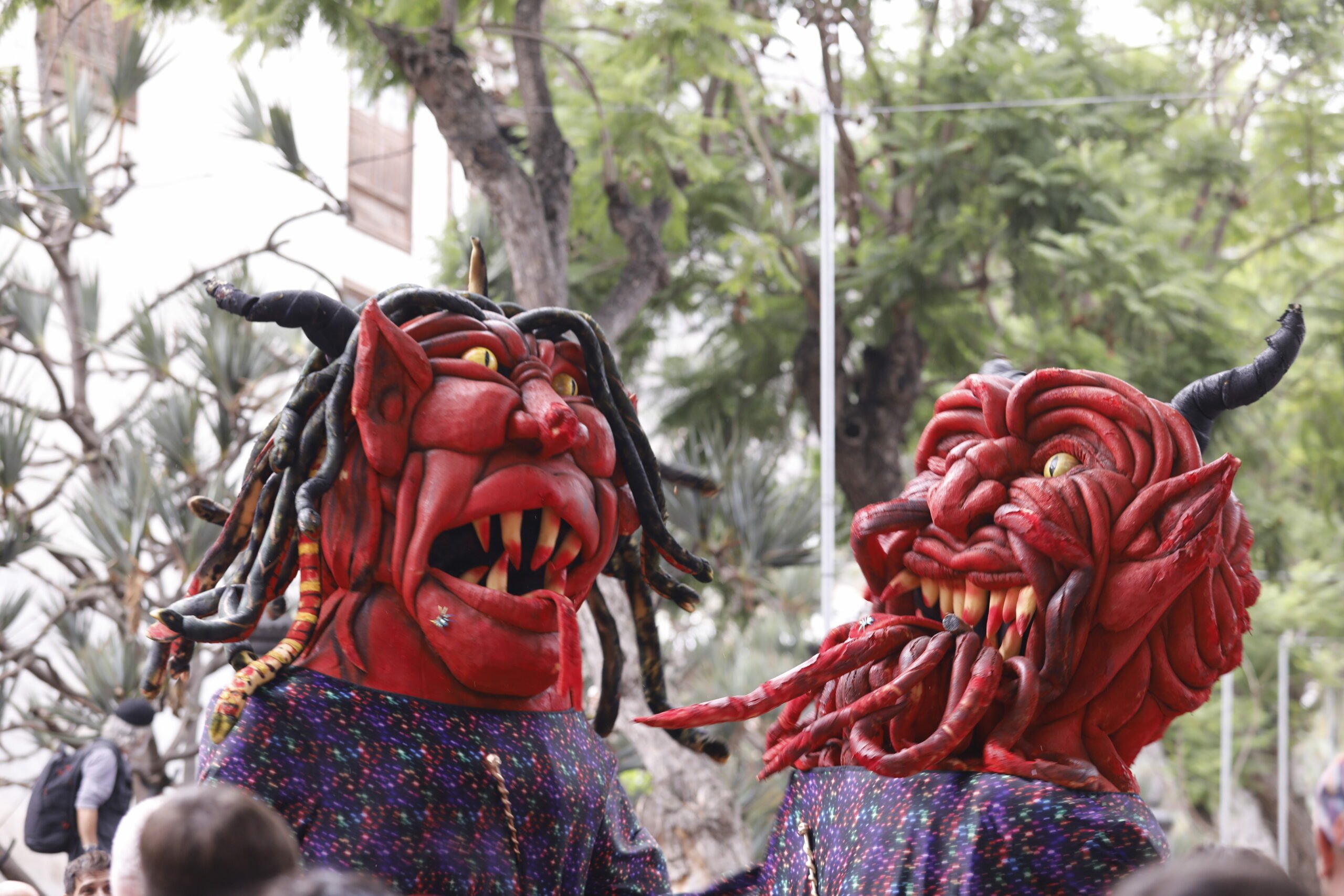
The Librea of the Devils is an ancient and original tradition where a devil and a she-devil dance to the rhythm of the tajaraste to frighten children, until the Virgin of Las Angustias appears to drive them away. Giant figures of devils and their entourage of cabezudos (big-headed puppets) dance through the streets until the Virgin’s procession banishes them. This performance was banned during Franco’s dictatorship but survived thanks to the devotion of the local community.
Las Angustias neighborhood
Mid-September
The Torches of Saint John (Los Hachitos de San Juan)
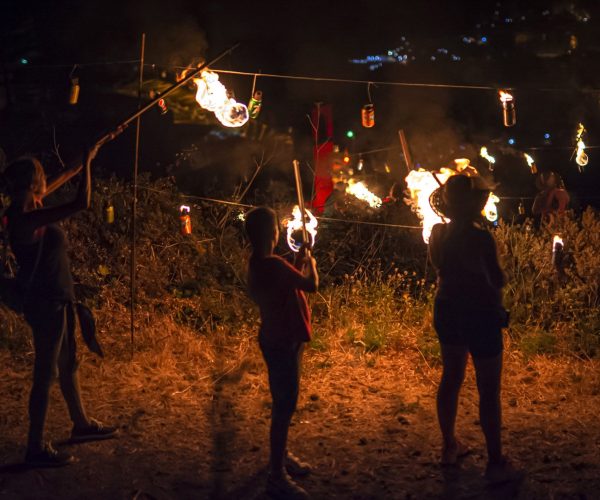
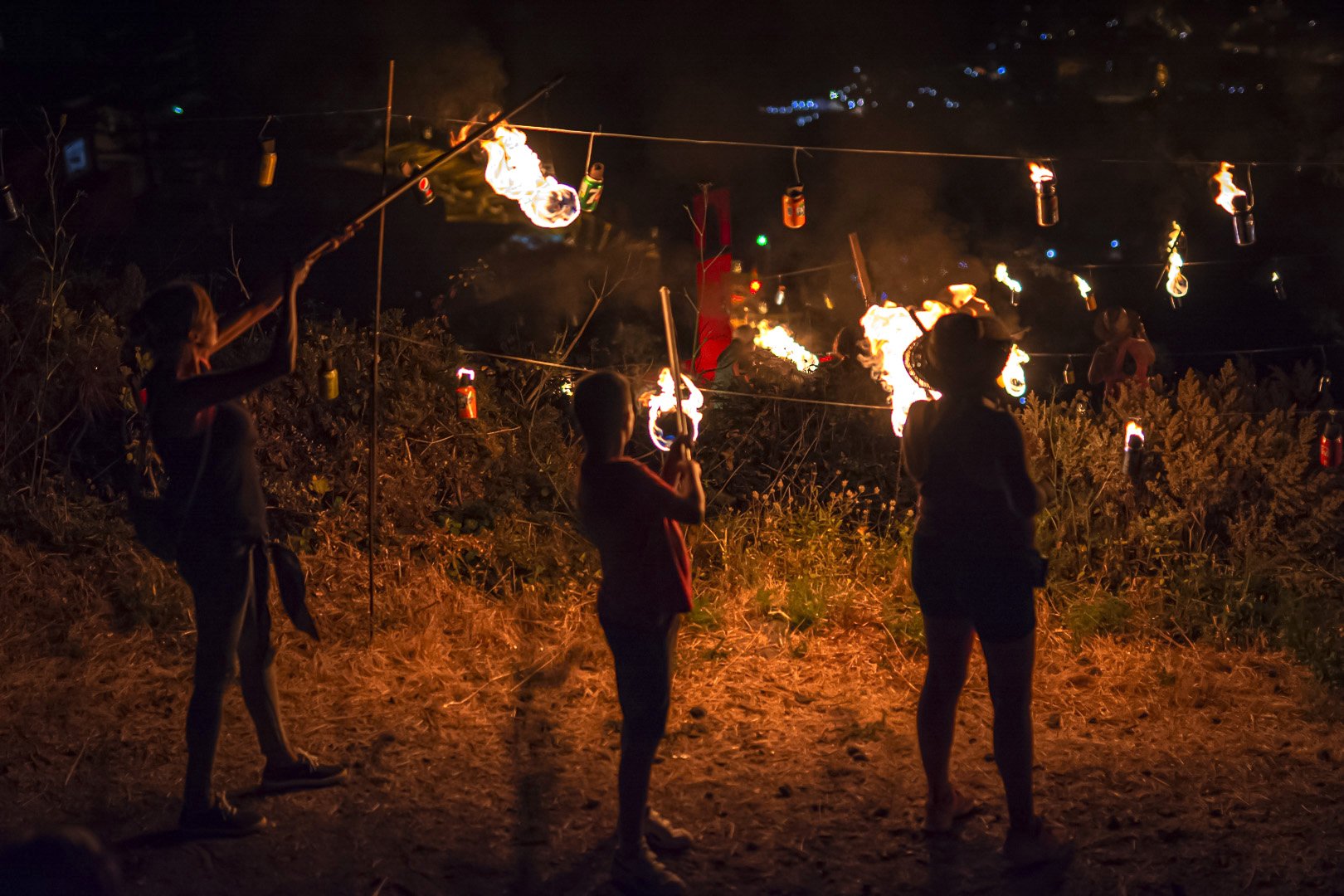
On Saint John’s Eve, everything bad is symbolically burned away. The night is illuminated by the flickering lights of torches and bonfires, a celebration likely rooted in ancient pre-Hispanic Canary rituals prior to the Castilian conquest of Tenerife. It represents a fusion of the aboriginal Magec sun cult and Christian traditions.
In Las Canales, the night comes alive with handmade torches crafted from blankets and recycled cans, and spectacular balls of fire that recall the island’s volcanic power. The neighborhood also celebrates its famous Cabezudos, who fill the streets with color and laughter.
In El Amparo, floral and ribbon-decorated torches parade up the hillside to dance around the bonfire.
At San Marcos Beach, torches light the way to seaside bonfires that bring the community together in joy.
Las Canales, El Amparo, and San Marcos Beach
June 23
The Buns of Saint Barbara (Bollos de Santa Bárbara)
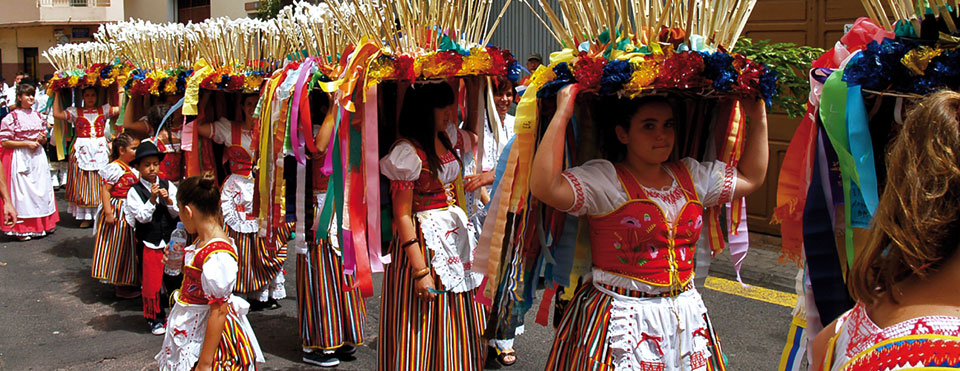
In this age-old tradition, young unmarried women carry figures made of cornstarch and sugar on their heads for several kilometers, hoping the Virgin will reward their effort by granting them a suitor. Twelve women—one for each letter of “Santa Bárbara”—depart in single file at three in the afternoon, carrying their baskets of buns adorned with colorful ribbons in a beautiful romería (pilgrimage).
Santa Bárbara neighborhood
Last Saturday in August
The Baskets of Saint Barbara (Cestos de Santa Bárbara)
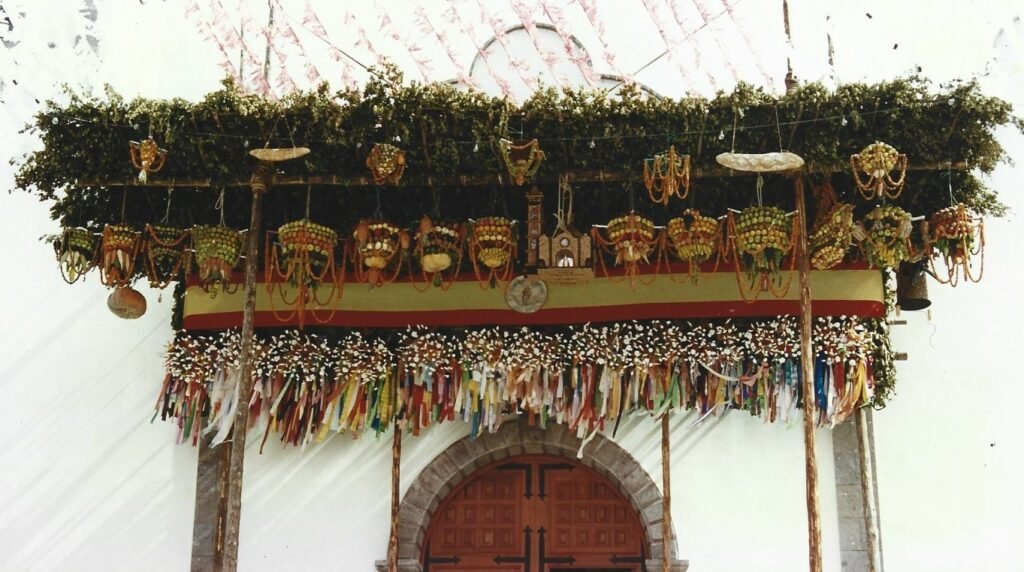
“In August, farmers become artisans as they prepare baskets of fruit in their courtyards to offer to their patron saint.” Each family crafts its own design, consisting of a wicker frame decorated with strings of fruits, vegetables, and potatoes, forming a colorful agricultural offering. The families of Santa Bárbara parade in pilgrimage with their Baskets and Buns, the highlight of the festivities. Once the procession reaches the church, the baskets are hung on a large wooden arch decorated with greenery.
Santa Bárbara neighborhood
Last Saturday in August
Romería of Poleo and Tajaraste
During this pilgrimage, participants climb the mountain to collect poleo mint to decorate the festival of the Virgin, accompanied by the Poleo Orchestra playing the traditional tajaraste. The mint adorns the church’s portico, while a huge cake covered with sugar figurines (alfeñiques) and bread dolls (madamas) forms the centerpiece. Songs, dancing, good wine, and food accompany offerings of poleo branches, in a beautiful blend of faith, tradition, and festivity.
El Amparo neighborhood
Late July and August
Boat Processions at San Marcos Beach
A moving fusion of popular and religious devotion, this maritime festival attracts large crowds to the harbor area. In June, it honors Saint John the Baptist and the Sacred Heart of Mary, and in July, the Virgin of Carmen. The images are carried in a seaborne procession, escorted by dozens of boats—both fishing and leisure vessels. Upon returning to the pier, the celebration concludes with a spectacular fireworks display.
San Marcos Beach
June 24 and July 16
The Balloon of Saint Anthony (El Globo de San Antonio)
The custom of launching aerostatic balloons is one of Tenerife’s most unique traditions, preserved only in this neighborhood of Icod de los Vinos. José Delgado Socas, affectionately known as Pepe El Capijo, revived and maintained the tradition of releasing the San Antonio balloon. Today, his family continues the legacy, crafting the balloon from paper, cane, and glue—all fragile materials that make its flight unpredictable. The balloon bears painted messages about current events, intended to lift the community’s spirits. The ascent is achieved using hot air, avoiding open flames to prevent fires.
San Antonio neighborhood
Mid-June
Decoration of the Crosses (El Enrame de Las Cruces)
Celebrated on Cross Day, this ancient festival dates back to at least the 17th and 18th centuries. Today, it remains a deeply rooted religious and cultural expression throughout the municipality. Beyond the Christian practice of decorating crosses in early May, locals also adorn fountains, house façades, flagpoles, and village stalls with flowers, palm leaves, and branches, filling the streets with color and devotion.
Icod de los Vinos
May 3
San Isidro Labrador Pilgrimage
This romería began in 1984, though devotion to San Isidro dates back to the 17th century and spread across Tenerife during the 18th century. Pilgrims carry decorated poles with colorful ribbons, some up to three meters tall, as they walk to the saint’s chapel. During the baile de magos (folk dance), participants offer small cane sticks (cañitas) to San Isidro in gratitude—a joyful blend of religion and festivity.
La Mancha neighborhood
First week of June
San Fermín Bull Run (Encierro de San Fermín)
The San Fermín Bull Run of Icod de los Vinos is unique in the Canary Islands. A local resident, Fermina Báez, donated land for a church dedicated to San Fermín, inspiring neighbors to create their own version of the Pamplona encierro—using foam bulls pushed on wheelbarrows. Participants dress in white and red, bringing humor and excitement to this now-beloved neighborhood tradition.
Hoya Ana Díaz neighborhood
July 7
The Amparo Plays (Las Comedias del Amparo)
These are folk theater performances whose origins date back to the early 20th century. After the procession of the Virgin of El Amparo, local actors perform humorous plays in verse on an improvised stage, often using homemade props. The plots reflect everyday life, addressing themes like emigration, unemployment, and local anecdotes, and are attended enthusiastically by the entire community.
El Amparo neighborhood
August 5
The Guanches of Candelaria
Each year, a procession departs from the Church of El Paredón toward the Candelaria neighborhood, where locals reenact the appearance of the Virgin of Candelaria to the Guanches, the island’s indigenous people. Participants dressed in goat hides and carrying traditional weapons recreate this historic encounter. Since 1994, the Guanches of Candelaria group, composed of local residents, has kept this touching custom alive.
La Candelaria neighborhood
August 15
The Flowers of Calvary (Las Flores del Calvario)
This religious festival honors the Rescued Christ, a sculpture crafted in Havana in 1723 and donated by emigrant Marcos Francisco Padrón. During the procession, arches decorated with paper flowers adorn the streets around the Calvario sanctuary. Formerly, the decorations were made of natural flowers offered by farmers, asking for blessings for their crops. The celebration concludes with a fireworks display over the Lomo.
Icod de los Vinos
Last Sunday in September
Romería of the Decorated “Pivas”
A relatively recent tradition, held since 1995, this festival features decorated agricultural vehicles known as pivas, once used for farm work and transport. The romería parades through the main road of La Vega, with music, dancing, and trailers adorned with palm leaves, flags, and ornaments, carrying locals who share food and drink with the crowd. Initially secular, the celebration now includes the images of Saint Nicholas and the Virgin of the Rosary.
La Vega neighborhood
Second half of October
The Pumpkin Parade (Paseo de Las Calabazas)
Created in 2013, this pilgrimage-style parade features locals dressed in traditional attire carrying decorated staffs topped with water gourds, offered to Saint James the Apostle. The event also includes a charitable food collection for those in need. The festival program includes music, competitions, and activities for all ages.
Buen Paso neighborhood
Late July
Every Day is a Festival in Icod de los Vinos
- January: January 17. Feast of Saint Anthony Abbot – El Amparo
- February–March: Carnival
- March - April: Holy Week (Passion Sunday to Easter Sunday) – Town center and neighborhoods
- April: April 25 Feast of Saint Mark – Town center
- May: May 3. Feast of the Holy Cross – La Cruz del Tronco
- May: May 3. Feast of the Holy Cross – La Cruz del Camino
- May: May 3. Feast of the Holy Cross – La Centinela
- May: May 26. Feast of Saint Philip Neri and Our Lady of Health – San Felipe
- June: Corpus Christi – Town center and neighborhoods
- June: 2nd Sunday of June. Feast of Saint Isidore the Laborer – La Mancha Localización: La Mancha
- June: June 12. Feast of Saint Anthony – San Antonio–Campino
- June: June 24. Feast of Saint John the Baptist
- June: June 27. Feast of Our Lady of Succor – Camino Valois Virgen del Socorro. Localización: Camino Valois.
- June: June 29. Feast of Saints Peter and Paul – Redondo
- July: July 7. Feast of Saint Fermín – Hoya Ana Díaz
- July: July 7. Feast of Our Lady of Fatima – La Florida
- July: July 16. Feast of Our Lady of Mount Carmel – Llanito Perera, Las Abiertas, and San Marcos Beach
- July: Feast of Saint Barnabas – La Vega
- July: July 25. Feast of Our Lady of Buen Paso and Saint James the Apostle – Buen Paso
- August: August 5. Feast of Our Lady of Amparo and Our Lady of the Snows – El Amparo
- August: August 15. Feast of Our Lady of Candelaria – La Candelaria
- August: August 25. Feast of Saint Barbara – Santa Bárbara
- September: September 15. Feast of Our Lady of Sorrows – Town center
- September: Last week of September – Feast of the Holy Christ of Calvary – Town center
- October: First week of October – Octave of the Holy Christ of Calvary – El Calvario
- October: October 8. Feast of Our Lady of the Rosary and Saint Nicholas – La Vega
- October: October 12. Feast of Our Lady of the Pillar – Las Lajas
- October: October 15. Feast of Our Lady of the Rosary – Los Piquetes
- November: Tradition of Saint Nicholas – La Vega
- November: November 29 - 30. Feast of Saint Andrew – Town center and neighborhoods
- December: December 4 - 6. Feast of Saint Barbara and the Immaculate Conception – Santa Bárbara
- December: Second Sunday of December. Feast of Saint Lucy – Las Canales
The Traditions of Icod de los Vinos
The festivals of Icod de los Vinos blend tradition, joy, and vibrant local culture. From romerías, dances, and parades to playful foam bull runs and maritime processions, each celebration reflects the unique identity of its neighborhoods. Music, fire, color, and devotion fill the festive calendar, inviting both locals and visitors to share in a story that is joyfully celebrated year after year.